Customer story · Voiser Live
IFOS Istanbul 2026: live translation in 27 rooms and 5 languages, all at once
At the world's largest ear, nose and throat congress, Serenas translated all 27 parallel sessions into five languages with Voiser Live. Not a single interpreter booth was built.
- Customer
- Serenas International Tourism Congress Organization Inc.
- Event
- XXIII World Congress of Otorhinolaryngology Head and Neck Surgery
- Date and venue
- 9–13 September 2026, Istanbul Congress Center and Hilton Istanbul Bosphorus
- Solution
- Voiser Live, AI live translation and captions
The event
A world congress that meets every four years
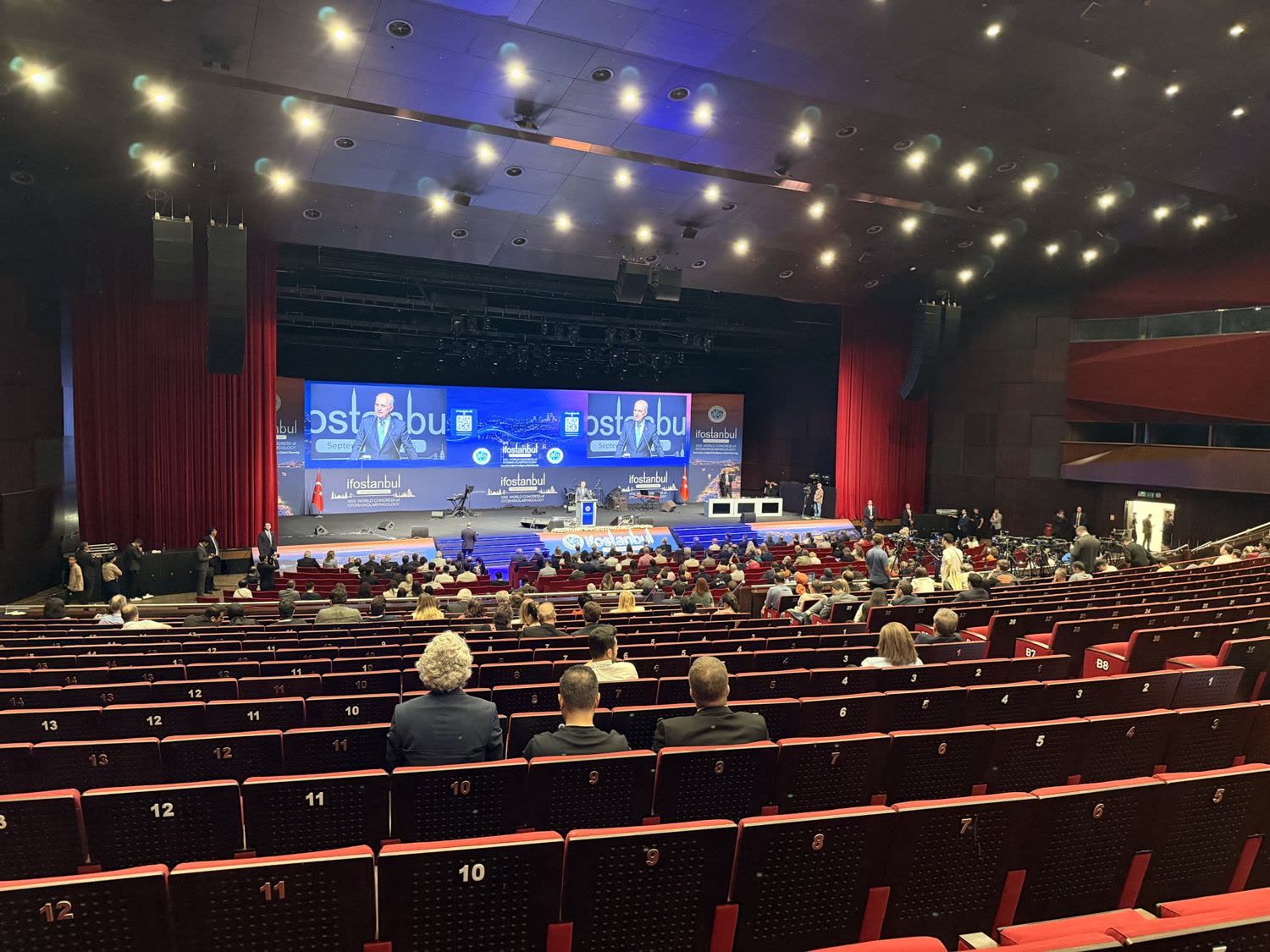
IFOS is the world congress of otorhinolaryngology and head and neck surgery, held every four years. In 2026 it came to Istanbul. Its theme was “Innovation, Artificial Intelligence, Global Diversity”, and the scientific programme ran across dozens of parallel rooms.
For Serenas, the organiser, the goal was clear: doctors arriving from all over the world should be able to follow any session, in any room, in their own language.
The need
Traditional simultaneous interpretation could not work at this scale
The classic approach needs a separate booth for every room and every language. 27 rooms and 5 languages means 135 booths. Interpreters work in shifts, so filling those booths takes around 270 conference interpreters, every one of them comfortable with ENT terminology.
Add to that handing out and collecting thousands of receivers, and the floor space the booths take up in each room. That is why large congresses usually offer interpretation in the main hall only, and every other room stays in one language.
The solution
What we did
- We set up the rooms before the congress. Each of the 27 rooms in the programme was prepared as its own broadcast.
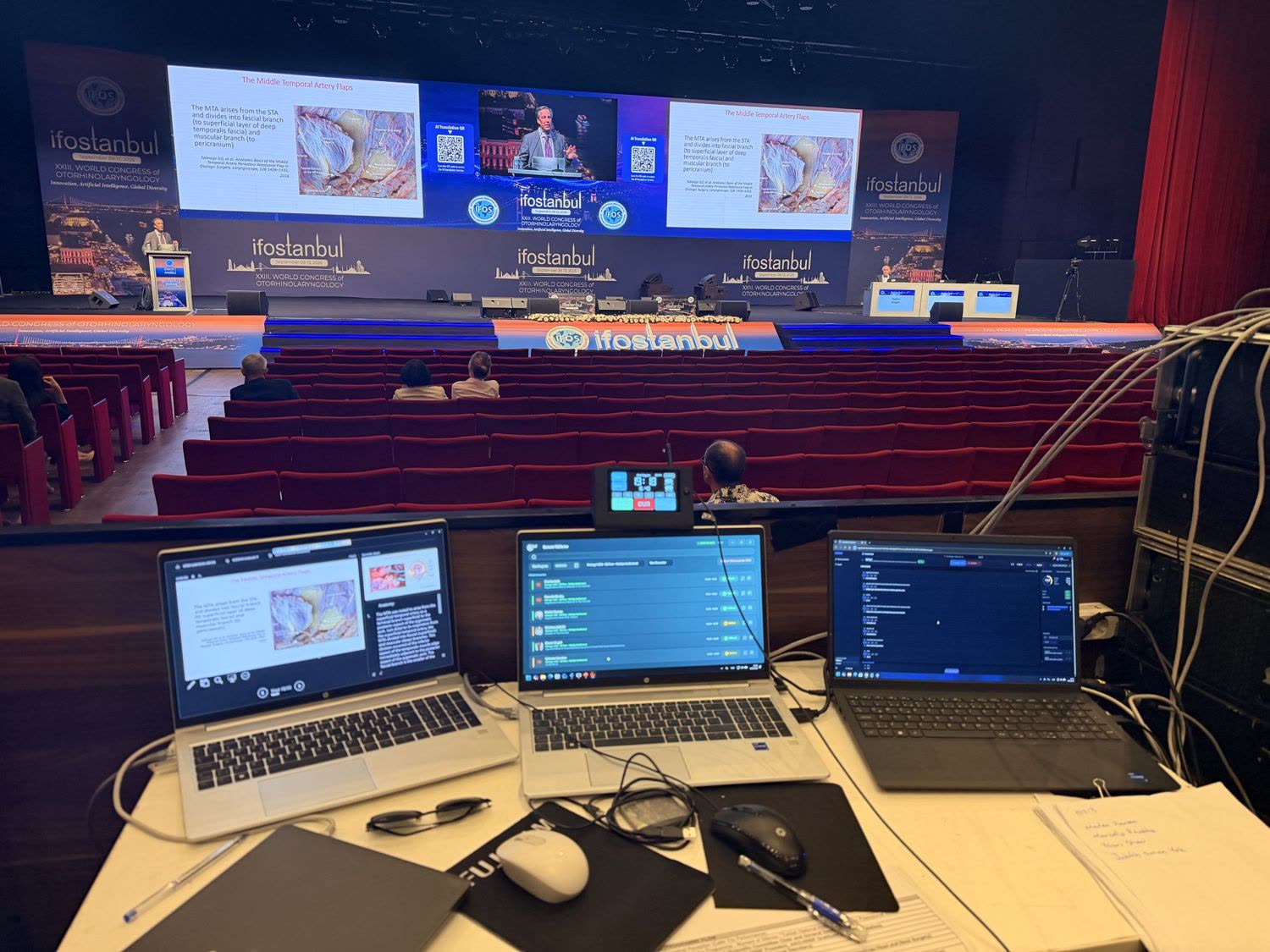
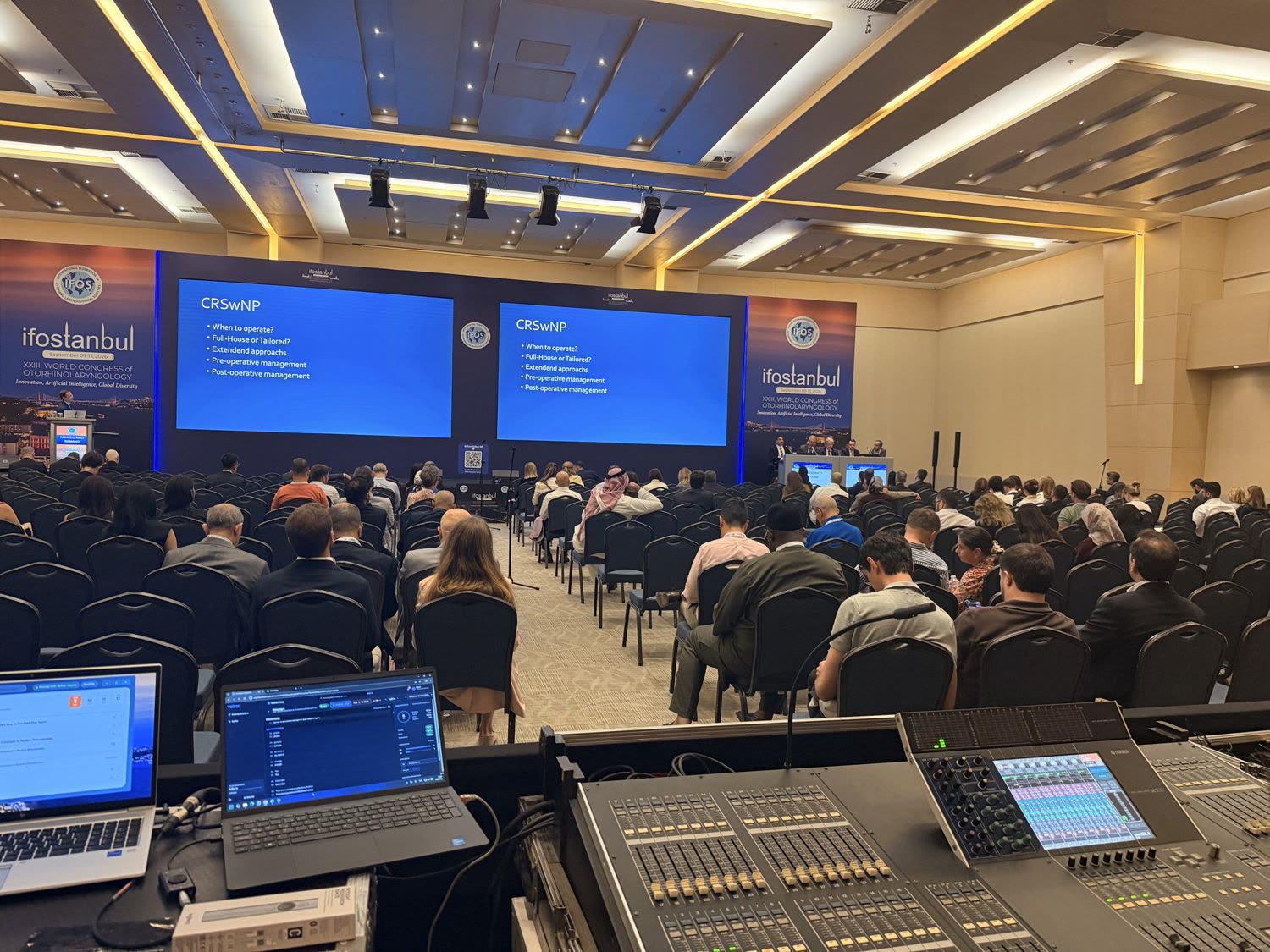
- We took the sound straight from the microphones. In every room, Voiser Live was connected to the sound desk, so speech came in as a clean signal without room noise or echo.
- We turned speech into text and five languages in real time. All 27 rooms were live at the same time, each independent of the others.
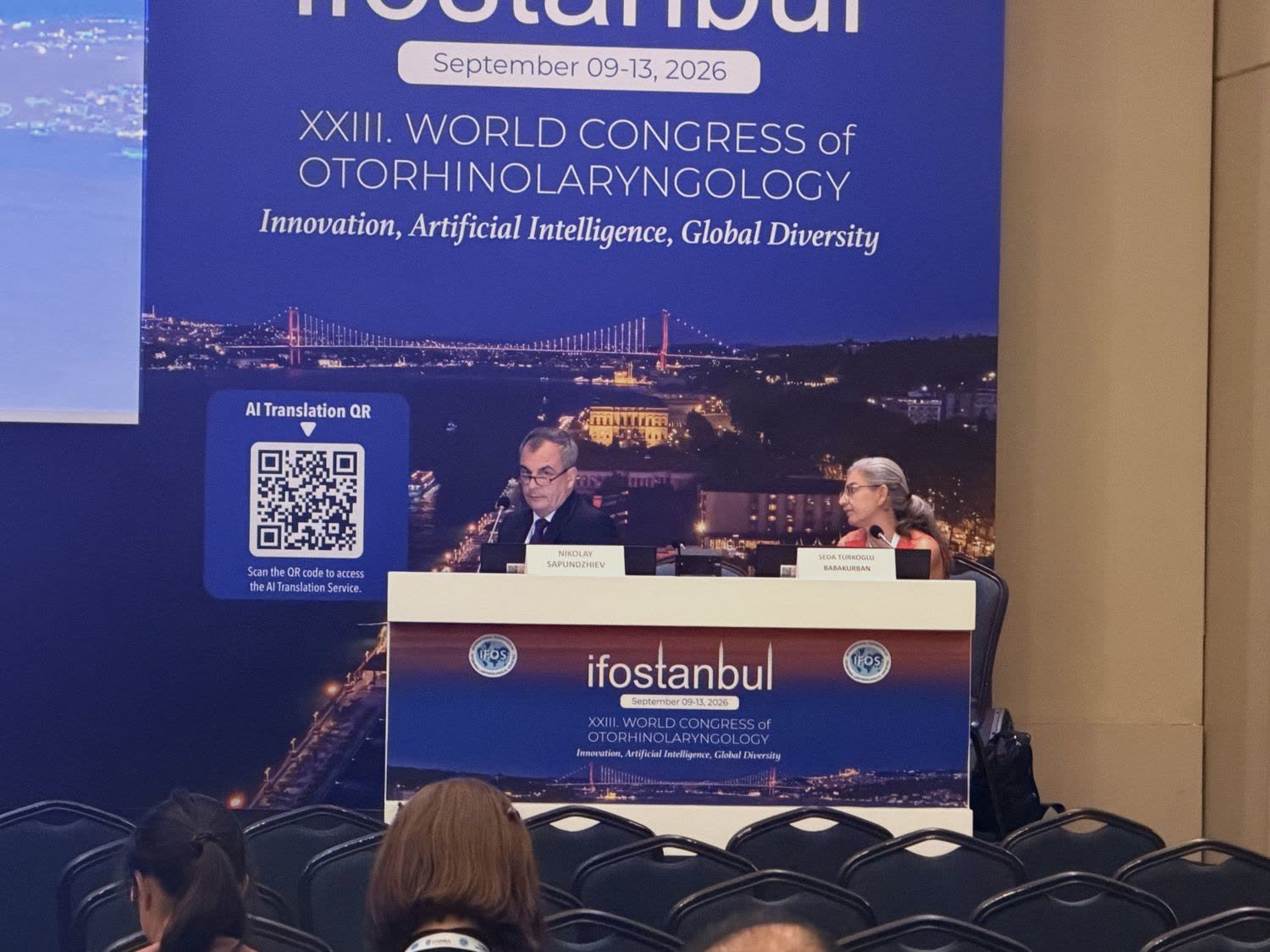
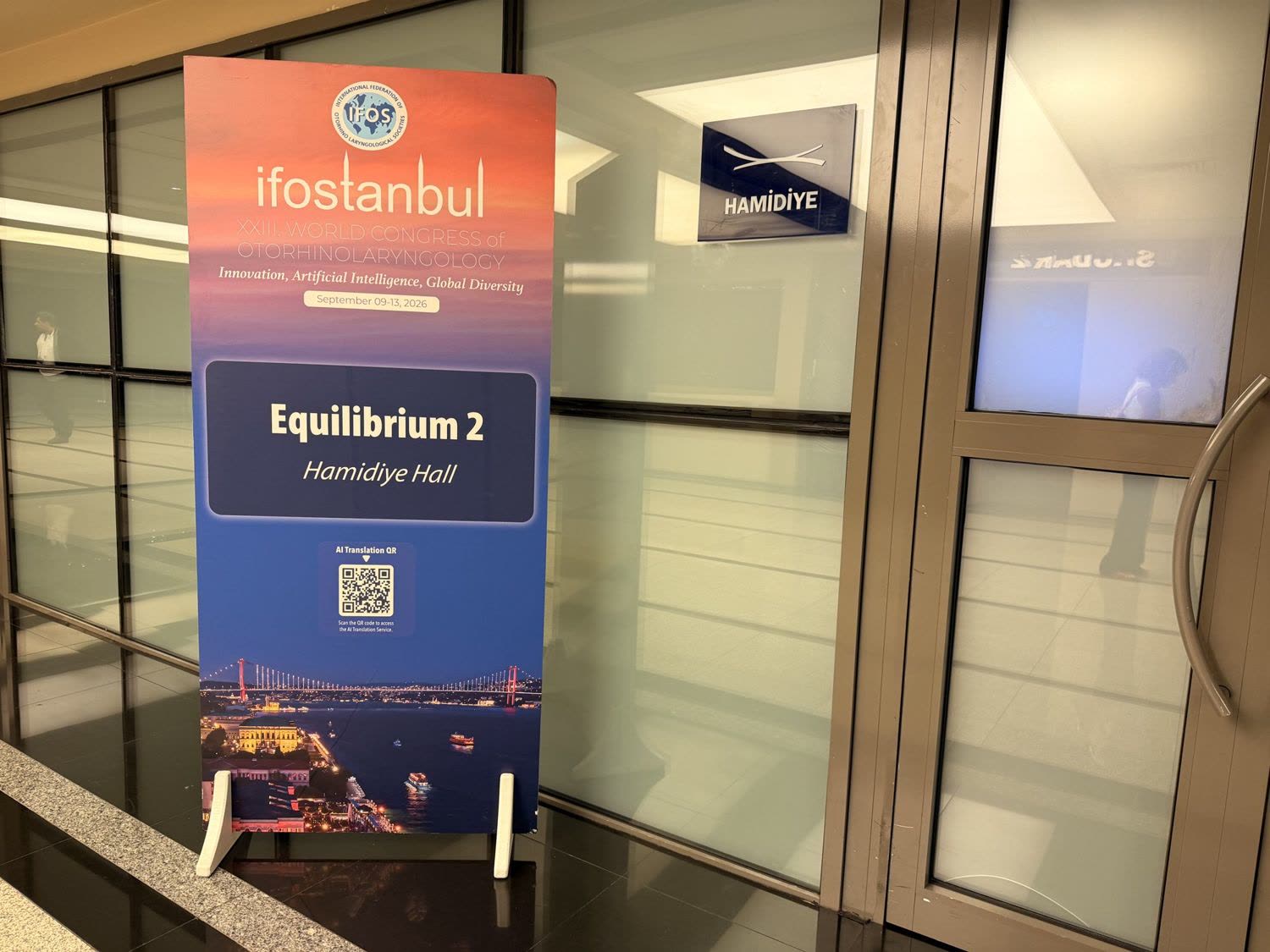
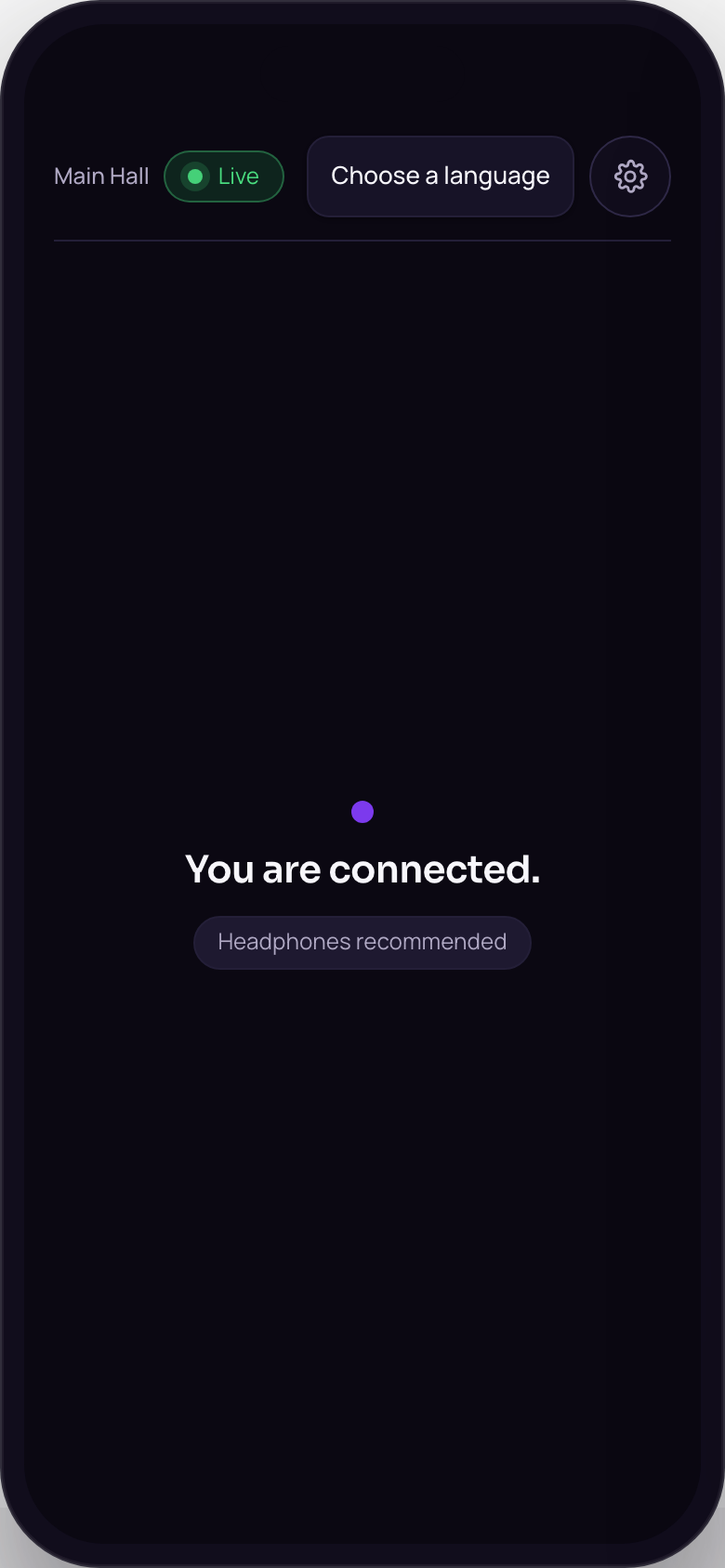
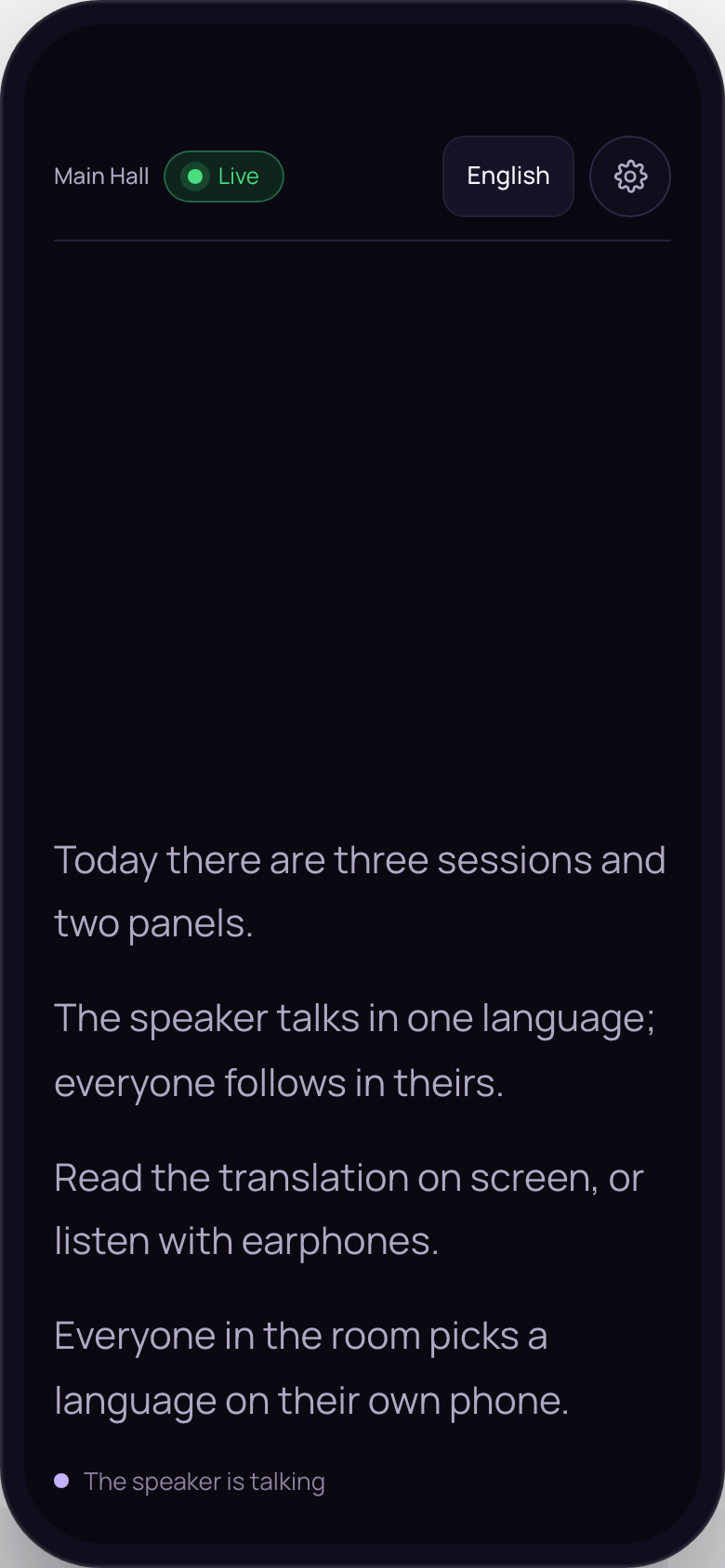
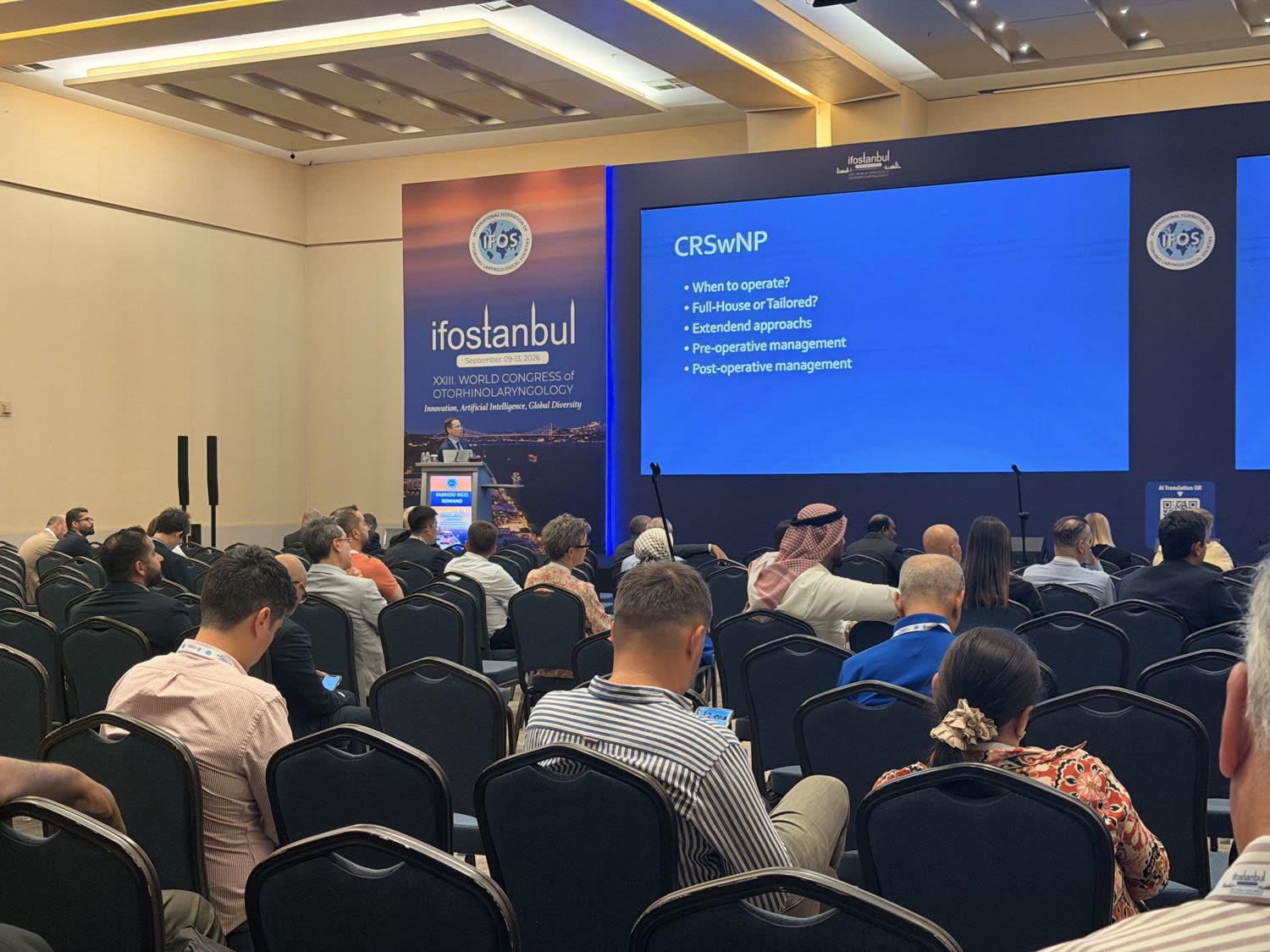
- We reached attendees with a QR code. Attendees scanned the code on the stage screens and on the signs at each room entrance, picked a language and followed the translation on their own phone. No app to download.
Today's listener screen
What made the difference
Three things that shaped the result
- Speed. The translation appeared almost as the speaker finished each sentence, so attendees could follow the slides, the speaker and the translation together.
- Scale. Every room was its own broadcast. All 27 rooms ran at the same time and independently, so sessions outside the main hall got the same service.
- A clean audio source. Because the sound came straight from the microphone line, speech was turned into text and translated with high accuracy.
| Traditional simultaneous interpretation | Voiser Live | |
|---|---|---|
| 27 rooms, 5 languages | 135 booths, around 270 interpreters | One computer per room |
| Equipment | Booths, interpreter consoles, transmitters, thousands of receivers | A sound desk connection and internet |
| Attendee experience | Queues for headsets, leaving an ID, returning the device | A QR code and their own phone |
| Adding a language | A new booth and a new team for every room | Picking it in the dashboard |
| Coverage | Usually the main hall only, because of the budget | Every room in the programme |
The result
Translation stopped being a main-hall privilege
For five days, all 27 rooms in the programme could be followed in five languages. Attendees chose sessions by topic, not by language. And Serenas offered language access across the whole congress without taking on the logistics and cost of 135 booths.
At a world congress themed around artificial intelligence, the language barrier came down with artificial intelligence too.
Let's talk about your next congress. The setup is the same for a one-room symposium and a 27-room world congress.
Request a meeting